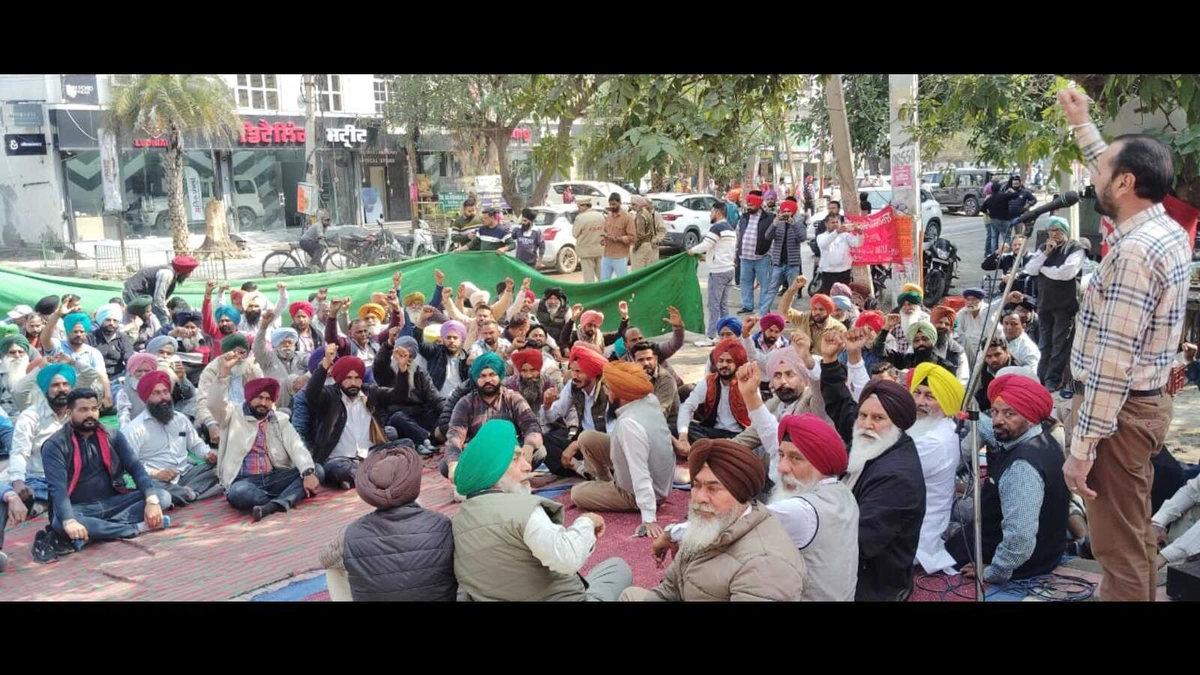
The scene outside the PSPCL (Punjab State Power Corporation Limited) office in Ludhiana isn’t your average Tuesday morning. It’s a sea of determined faces, a chorus of slogans echoing demands for job regularization. PSPCL workers protest , but it’s more than just a protest; it’s a desperate plea for stability, for the basic human right of a secure livelihood. But what’s the real story here? Why are these employees, who keep the lights on for millions, fighting for their own?
The Roots of the Discontent | Understanding the “Why”
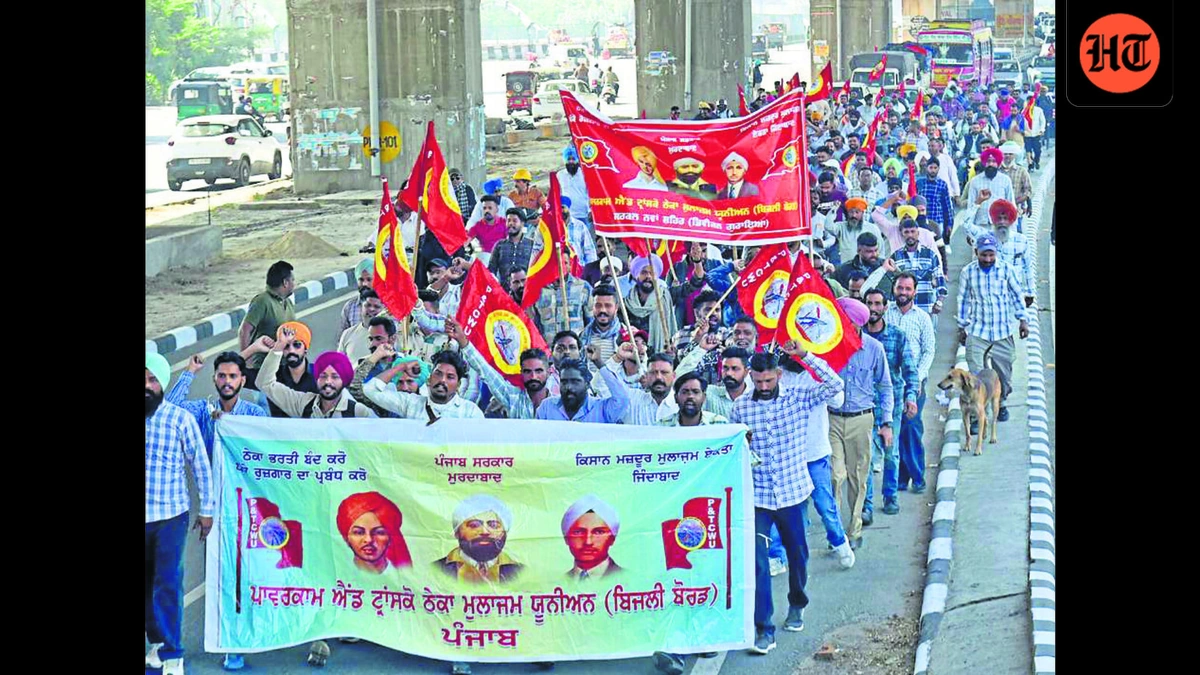
Let’s be honest, understanding labour unrest in India often feels like peeling an onion – layer upon layer of complexities. In this case, the core issue revolves around contractual employment. Many PSPCL workers have been toiling for years, sometimes even decades, without the security and benefits afforded to regular employees. Think about it: these are the folks on the front lines, maintaining power lines, responding to outages, and ensuring the smooth functioning of the electricity grid. Their work is essential, yet their employment status remains precarious.
The crux of the matter? It boils down to the promise of regularization. Over the years, assurances have been made, committees formed, and deadlines set – only to be repeatedly broken. This isn’t just about job titles; it’s about fair wages, access to healthcare, pension plans, and the dignity of knowing you have a stable future. What fascinates me is how essential these workers are, and yet how easily their contributions are overlooked. This protest is a stark reminder that keeping the lights on comes at a human cost.
The demand for job regularization isn’t some abstract concept; it’s about real people with families to support, children to educate, and dreams to fulfill. It’s about moving from a state of constant uncertainty to one of stability and hope. And, honestly, the delay in addressing this issue fuels resentment and a sense of injustice. These workers are demanding what they believe they’ve rightfully earned through years of dedicated service.
The Human Cost | Stories from the Front Lines
Statistics and policy jargon can only tell you so much. To truly grasp the impact, you need to hear the stories of the individuals involved. Imagine being a lineman, risking your life every day to repair high-voltage lines, knowing that one wrong move could be fatal. And then imagine doing that job without the assurance of a secure future for your family. The mental toll is immense.
I’ve heard accounts of workers delaying medical treatment because they lack adequate health insurance, of families struggling to make ends meet due to low wages and the absence of benefits. These aren’t just numbers on a spreadsheet; they’re real people facing real hardships. Their stories highlight the urgent need for a resolution. Many of these workers are not asking for the moon; they are asking for fair compensation and benefits for their work. This also applies for the government sector in Rajasthan.
PSPCL’s Perspective | Navigating the Tightrope
Of course, there are always two sides to every story. PSPCL, like any large organization, faces its own set of challenges. Regularizing a large number of contractual employees would undoubtedly have significant financial implications. There are budgetary constraints to consider, along with the need to maintain operational efficiency. According to some sources, PSPCLis trying to negotiate with the government. However, that may prove difficult. Also, there may be legal hurdles involved, ensuring that any regularization process adheres to existing laws and regulations.
But here’s the thing: simply citing financial constraints isn’t a sufficient response. It’s crucial to explore creative solutions, to find a middle ground that addresses the workers’ concerns while also safeguarding the financial health of the corporation. Perhaps a phased approach to regularization, or a restructuring of existing contracts, could offer a viable path forward.
Possible Solutions | A Way Forward
So, what can be done? The solution likely lies in a multi-pronged approach that involves open dialogue, transparent negotiations, and a willingness to compromise from all stakeholders. A common mistake I see is the lack of clear communication. Regular meetings between PSPCL management and employee representatives are essential to build trust and foster a collaborative environment.
Government intervention may also be necessary to facilitate a resolution. The state government could offer financial assistance or guidance on navigating the legal complexities of regularization. Ultimately, finding a solution requires a commitment to fairness, transparency, and a genuine desire to address the grievances of these dedicated workers. One also has to consider that this will affect the power sector and the energy sector as a whole. It will affect citizens’ lives across India, in fact.
Remember that government programs often play a role in these decisions.
The Larger Picture | Labour Rights in India
The PSPCL workers’ protest is not an isolated incident; it’s a microcosm of the larger challenges facing contractual workers across India. The increasing reliance on contractual employment has created a two-tiered system, where some workers enjoy the security and benefits of regular employment, while others are left vulnerable and marginalized. This trend raises serious questions about labour rights and social justice.
Addressing this issue requires a fundamental shift in mindset, a recognition that all workers deserve to be treated with dignity and respect. Strengthening labour laws, ensuring fair wages, and promoting secure employment opportunities are essential steps towards creating a more equitable society. In the end, it’s about investing in people, recognizing their value, and providing them with the opportunity to thrive.
FAQ About the PSPCL Workers Protest
What are the main demands of the protesting PSPCL workers?
The primary demand is for regularization of jobs for contractual employees who have been working for PSPCL for many years.
How long have these protests been going on?
While specific dates vary, protests for permanent jobs have been recurring for a considerable period, with intermittent escalations.
What is PSPCL’s official response to the protests?
PSPCL has acknowledged the workers’ demands but cites financial and legal constraints in immediately fulfilling them.
What are the potential consequences of this strike for the general public?
Prolonged strikes could potentially disrupt power supply and other essential services dependent on PSPCL’s operation.
Are there any ongoing negotiations between the workers and PSPCL management?
Negotiations have been attempted in the past, but their current status and effectiveness are unclear.
How does this protest relate to broader labour issues in Punjab?
It reflects a wider trend of contractual employment and demands for better working conditions across various sectors in Punjab.
The Ludhiana protest isn’t just about electricity; it’s about the power of collective action, the fight for fairness, and the enduring human spirit that refuses to be extinguished. As the sun sets on Ludhiana, the echoes of their demands linger in the air, a potent reminder that the quest for justice never sleeps.



Leave feedback about this