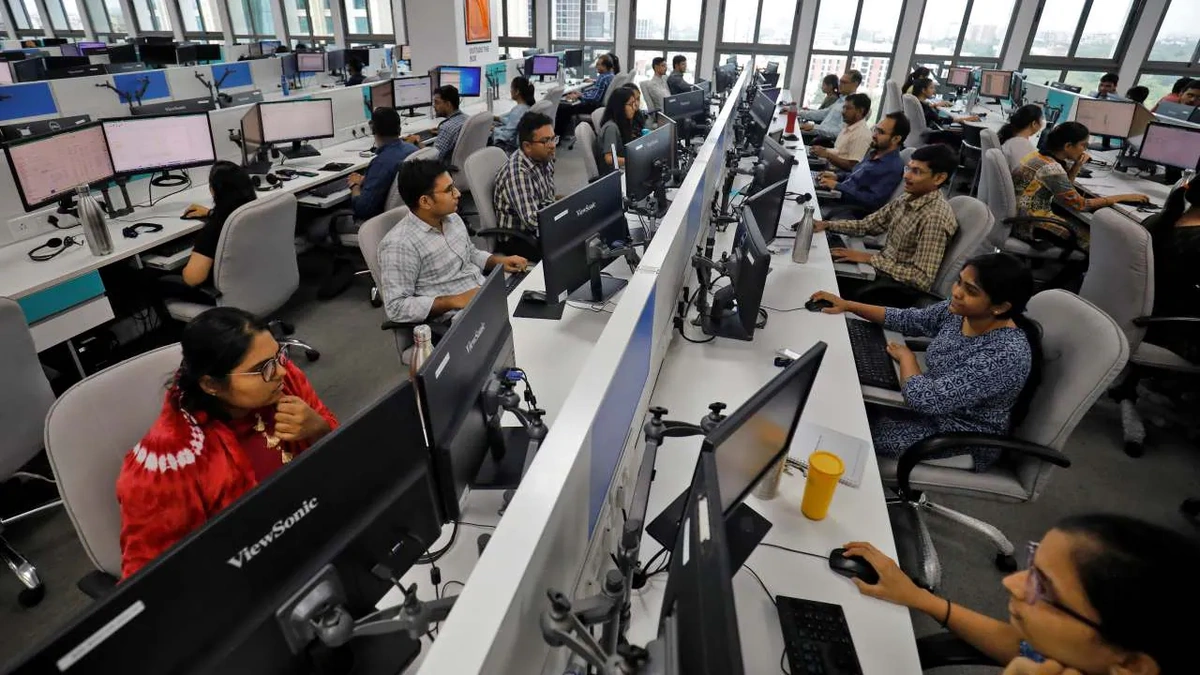
Saurabh Mukherjea’s warning of 20 million Indian jobs being at risk is not just another headline; it’s a flashing red signal about the economic undercurrents affecting India’s burgeoning middle class. But here’s the thing: simply knowing the number doesn’t tell the whole story. We need to understand why this is happening, and more importantly, what it means for you, me, and everyone hoping for a secure financial future in India.
The Middle-Class Squeeze | More Than Just Inflation

So, why are these job losses predicted? It boils down to a perfect storm brewing for the Indian middle class. It’s not just about inflation eroding purchasing power, though that’s certainly a big piece of the puzzle. What fascinates me is how various factors are interlinked, creating a domino effect. Slowing global growth impacts Indian exports, which in turn affects manufacturing employment . Then there’s the increasing automation in sectors like IT and manufacturing, displacing workers who lack the skills for the new economy. And let’s be honest, the rising cost of education and healthcare is putting immense pressure on middle-class households, leaving them with less disposable income to drive consumption – impacting the retail sector and Indian jobs there too. According to reports, the informal sector, a major source of employment for the lower middle class, is also feeling the pinch due to increased competition from organized players and the impact of regulations. This is where the potential loss of employment is becoming more of a reality.
Automation and the Skills Gap | A Double Whammy
Let’s drill down on automation. It’s not just about robots replacing factory workers; it’s about algorithms streamlining processes in banks, AI handling customer service, and machine learning optimizing supply chains. These advancements are fantastic for productivity, but they also require a workforce with fundamentally different skills. The problem? Our education system and vocational training programs are struggling to keep pace. We are creating a skills gap, where millions of Indians are effectively unemployable in the modern economy. I initially thought this was straightforward, but then I realized the nuance. It’s not just about coding skills; it’s about critical thinking, problem-solving, adaptability, and creativity – skills that are harder to teach but essential for navigating the changing employment landscape. As I have seen with my friends and family, it’s more important now than ever to keep up with the changing times.
The Global Economic Headwinds | India’s Exposure
India isn’t an island; we’re deeply connected to the global economy. And right now, the global winds are blowing in the wrong direction. Trade wars, geopolitical tensions, and slowing growth in major economies like the US and Europe are all impacting India’s export-oriented industries. The ripple effect is significant. For example, a slowdown in demand for Indian textiles in Europe directly translates to job losses in textile manufacturing hubs like Surat and Tirupur. Similarly, a decline in IT spending by US companies affects the Indian IT sector, leading to hiring freezes and potential layoffs. But it’s not all doom and gloom. India’s large domestic market provides a buffer, and the government’s focus on infrastructure development is creating new opportunities. However, these positive forces need to be accelerated to counteract the negative global trends. You can find more information on related government jobs on this page .
Beyond Job Losses | The Impact on Social Fabric
Here’s where it gets really serious. Job losses, especially on this scale, aren’t just about numbers; they’re about real people and families. The stress, anxiety, and financial hardship caused by unemployment can have devastating consequences on mental health, family relationships, and social cohesion. Increased income inequality can lead to social unrest and political instability. Moreover, the decline in middle-class incomes can impact consumption patterns, leading to further economic slowdown. I am reminded of a story I read recently about a family that had to sell their house because the main breadwinner lost his job. This is not an isolated incident; it’s a growing trend that needs urgent attention. And it’s not just about financial security; it’s about dignity, self-worth, and the ability to provide for one’s family. The government needs to not only focus on the economy, but also on the social consequences of these economic trends. You can check out some recent job postings here.
Navigating the Uncertainty | Skills, Adaptability, and Resilience
So, what can be done? The answer isn’t simple, but it starts with recognizing the scale and complexity of the challenge. Here’s the thing: we can’t just rely on the government to solve this problem. Individuals, businesses, and educational institutions all have a role to play. For individuals, it’s about investing in lifelong learning, upskilling, and adapting to the changing demands of the job market . For businesses, it’s about investing in employee training, fostering innovation, and creating a more inclusive work environment. And for educational institutions, it’s about reforming the curriculum, promoting vocational training, and preparing students for the jobs of the future. Let me rephrase that for clarity: We need a collective effort to build a more resilient, adaptable, and equitable economy. One important aspect of job growth is economic development as defined on Wikipedia . The government is also trying to promote more government jobs to help provide income to families and the country. A common mistake I see people make is thinking that education ends with a degree. In today’s world, learning is a continuous process.
FAQ
Frequently Asked Questions
What specific sectors are most at risk?
Manufacturing, IT, and retail are facing significant challenges due to automation and global economic factors.
What skills are most in demand in the current job market ?
Critical thinking, problem-solving, adaptability, and technical skills related to AI and data science are highly valued.
What can the government do to address this issue?
Invest in education, promote vocational training, support small businesses, and create a conducive environment for innovation and entrepreneurship.
How can individuals prepare for potential job displacement ?
Upskill, network, explore new career paths, and develop a resilient mindset.
Are there any emerging sectors that offer new job opportunities ?
Renewable energy, healthcare, e-commerce, and digital marketing are growing sectors with significant potential.
Is this a temporary problem, or will it persist?
The challenges are likely to persist, requiring long-term solutions and continuous adaptation.
Saurabh Mukherjea’s warning is a wake-up call. It’s time to acknowledge the challenges, embrace change, and work together to create a more prosperous and equitable future for all Indians. The future of Indian jobs depends on our collective action, agility, and resilience.


Leave feedback about this