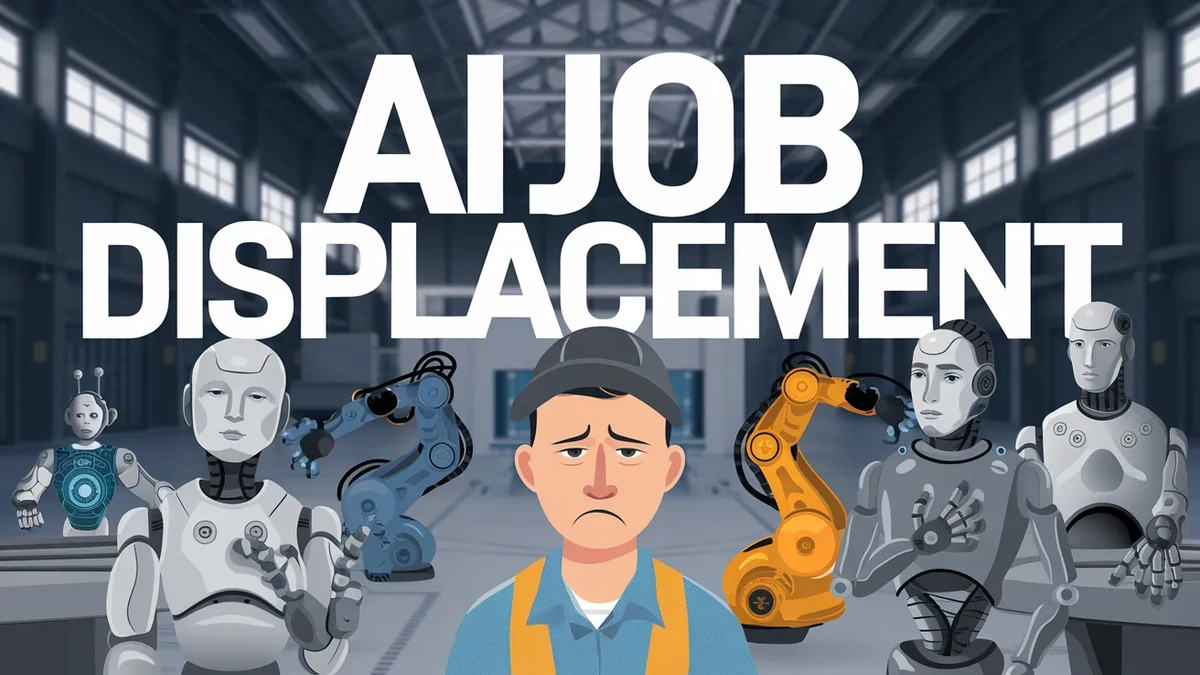
Okay, let’s be real. If you’re an Indian millennial (or even close to it), you’ve probably had that late-night, existential dread-filled thought: “Will a robot steal my job?” A recent report is basically confirming those fears, and honestly, it’s not exactly a shocker. But why is this happening, and what can you do about it? That’s what we’re going to dive into.
The AI Job Displacement Tsunami | Why Now?

It’s not like artificial intelligence (AI) just popped up overnight. We’ve been hearing about it for years. So why is this fear of AI job displacement hitting fever pitch now ? Here’s the thing: AI has moved beyond the theoretical and into the practical. Think about it – ChatGPT can write articles (though hopefully not as engaging as this one!), AI can design graphics, and algorithms are increasingly managing tasks previously done by humans. According to a World Economic Forum report, certain roles are becoming obsolete, and that number is only expected to grow.
And India, with its massive young workforce, is particularly vulnerable. We’re talking about millions of people potentially needing to reskill or face unemployment. The government knows this, of course. That’s why there is so much emphasis on new technologies.
The Millennial Vulnerability | A Perfect Storm
Why are millennials, in particular, so worried? Well, several factors are at play. First, many millennials entered the workforce during or shortly after the 2008 recession, a period of immense economic instability. This experience ingrained a sense of job insecurity early on. Add to that the rise of the gig economy, which offers flexibility but often lacks the stability and benefits of traditional employment. Now toss in the AI wildcard, and you’ve got a recipe for anxiety.
What fascinates me is that millennials are often painted as tech-savvy digital natives. But that doesn’t automatically translate to being AI-proof. Many jobs held by millennials – in areas like data entry, customer service, and even some aspects of marketing – are prime targets for automation. A common mistake I see people make is thinking that just because they use technology, they’re safe from it. It’s about understanding how technology is changing the nature of work itself.
Future-Proofing Your Career | Practical Strategies
Okay, so the picture might seem a bit bleak. But it’s not all doom and gloom. The key is to be proactive and focus on skills that AI can’t easily replicate. Here’s how:
- Embrace Lifelong Learning: This isn’t just a buzzword. It means actively seeking out opportunities to learn new skills and stay updated on industry trends. Platforms like Coursera, edX, and even YouTube offer a wealth of resources.
- Focus on “Human” Skills: AI is great at crunching numbers and following algorithms, but it struggles with creativity, critical thinking, emotional intelligence, and complex problem-solving. These are the skills that will be in high demand.
- Consider Reskilling or Upskilling: Maybe your current role is at risk. That doesn’t mean you’re out of options. Explore related fields where your existing skills can be applied. For example, if you’re in data entry, consider learning data analytics. There are a lot of job market trends to consider right now.
- Network, Network, Network: Build relationships with people in your industry and related fields. Attend conferences, join online communities, and connect with people on LinkedIn. Networking can open doors to new opportunities and provide valuable insights. You can start at RajRojgar .
Let me rephrase that for clarity – don’t just passively scroll through job postings. Actively engage with people in your field. Ask questions, seek advice, and build genuine connections.
The Government’s Role | Policy and Support
It’s not just up to individuals to adapt to the changing job market. The government also has a crucial role to play in providing support and creating policies that promote a smooth transition. This could involve investing in education and training programs, providing financial assistance to those who are unemployed, and creating incentives for businesses to reskill their workforce. The good news is that the government is already taking steps in this direction, with initiatives like Skill India aiming to boost skill development and promote entrepreneurship.
Beyond the Report | Reframing the AI Narrative
Ultimately, the fear of AI replacing jobs is understandable. But it’s important to reframe the narrative. AI shouldn’t be seen as a threat, but as a tool. A tool that can automate repetitive tasks, free up human workers to focus on more creative and strategic work, and drive innovation. It’s about finding the right balance between human skills and artificial intelligence – a synergy that can lead to a more productive and fulfilling work environment. The important thing is to understand digital transformation and how it will affect the future of work .
So, take a deep breath, Indian millennials. The future is uncertain, yes, but it’s also full of opportunities. Embrace change, focus on your strengths, and never stop learning. And who knows, maybe you’ll be the one building the AI that changes the world.
FAQ Section
What if I don’t know where to start with reskilling?
Start by identifying your interests and strengths. What do you enjoy doing? What are you good at? Then, research industries that are growing and that align with your interests. Look for online courses, workshops, and other resources that can help you develop the necessary skills.
Are there any specific industries that are less likely to be affected by AI?
Industries that require a high degree of human interaction, creativity, and critical thinking are generally less susceptible to automation. This includes areas like healthcare, education, social work, and the arts.
What if I can’t afford to reskill?
There are many free or low-cost resources available online. Look for government-sponsored programs, community colleges, and online learning platforms that offer affordable courses and training programs. Also, consider seeking out mentorship opportunities.
Is it too late to switch careers?
It’s never too late to switch careers! While it may require more effort and planning, it’s definitely possible to make a successful career change at any age. Focus on building your skills, networking, and gaining relevant experience.
So here’s the thing, the one thing you absolutely must double-check is that you have a growth mindset and are open to changing and growing.




Leave feedback about this