
Let’s be honest, talking about Bihar unemployment can feel a bit like staring into an abyss. Numbers, statistics, reports – they all swirl around, but what do they really mean for the young person in Patna dreaming of a better life? What fascinates me is the sheer disparity. Bihar, a land rich in history and culture, is struggling to provide opportunities for its youth. It’s a complex issue, and simply blaming the government isn’t enough. We need to dig deeper. This isn’t just about jobs; it’s about aspirations, potential, and the future of a state.
The Deep Roots of the Problem
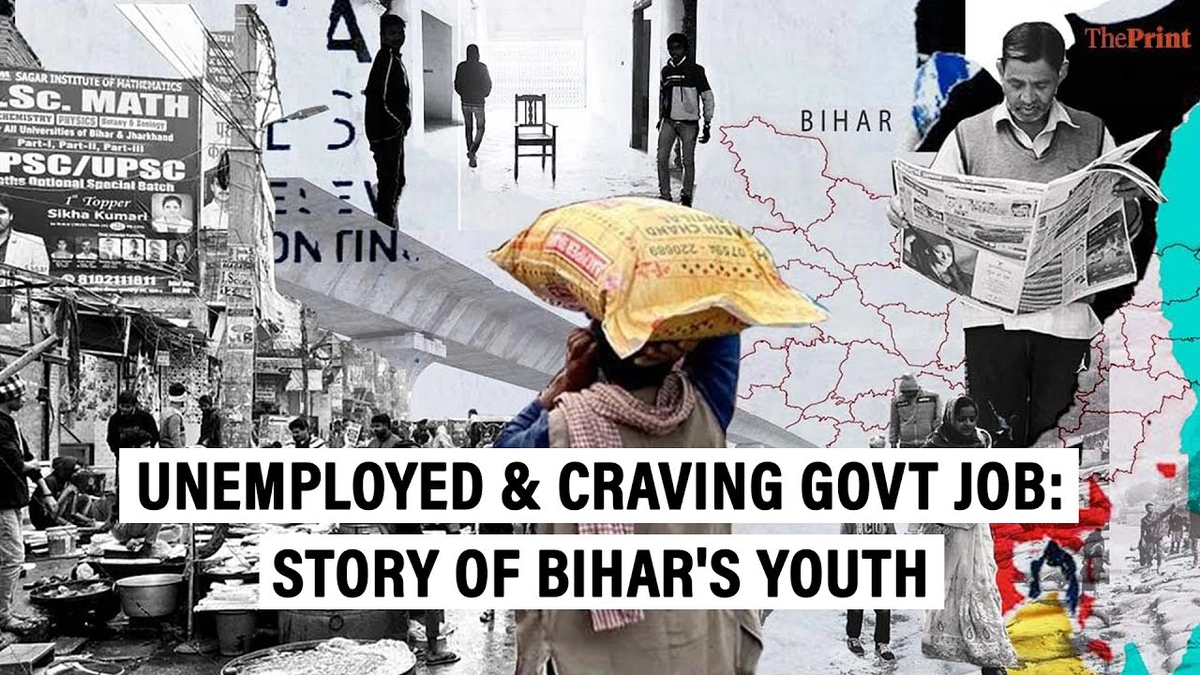
So, why this crisis? A big part of it lies in the state’s economic structure. Agriculture, while vital, can’t absorb the massive number of young people entering the workforce each year. And let’s not forget the crucial role of education. Are our schools and colleges adequately preparing students for the modern job market? A lot of the time, the answer is, sadly, no. They don’t teach them the skills they need.
The lack of industrial development is another major factor. Bihar hasn’t attracted enough investment to create diverse employment opportunities. This leads to a mass exodus of young people seeking jobs in other states. The vicious cycle continues. I initially thought that this was just a matter of simple economics, but I realized there were deeper sociological issues at play.
According to a recent report by the Centre for Monitoring Indian Economy (CMIE) , Bihar consistently shows higher unemployment rates than the national average. What’s more, a lot of these are educated young people with degrees, but with not that many options available to them.
Education and Skills | The Widening Gap
The education system in Bihar is, to put it mildly, facing challenges. A common mistake I see is the focus on rote learning rather than practical skills. The one thing you absolutely must consider when looking at solutions is the quality of education on offer. Are the students equipped with the skillset to survive in the 21st century job market?
Many graduates lack the skills demanded by industries, leading to a significant skills gap. It’s not just about having a degree; it’s about being employable. Skill development initiatives are crucial, but they need to be implemented effectively and aligned with industry needs.
Here’s the thing: a lot of young people are forced to take up jobs that don’t align with their qualifications. This leads to job dissatisfaction and underemployment, further fueling the crisis. What fascinates me is how some states manage to get this right. And some just don’t.
Migration | A Symptom, Not a Solution
The large-scale migration of young people from Bihar to other states in search of employment is a well-known phenomenon. But it is more than just numbers. It has a big impact on the families that are left behind. This is a symptom of the underlying problem, not a solution. While remittances sent back home contribute to the state’s economy, the social costs are immense.
What if we could create an environment where young people wanted to stay in Bihar? What if they saw a future for themselves here? That’s the question we need to be asking. The current situation leads to a brain drain, depriving the state of its most valuable asset: its youth. The government needs to focus on incentivising local job creation, and creating an atmosphere of growth.
Consider this: if Bihar could harness even a fraction of the talent that migrates out, it could transform its economic landscape. As per the data from the Labour Bureau, a significant percentage of migrants from Bihar are employed in the informal sector in other states, often facing precarious working conditions and low wages.
Government Initiatives and the Road Ahead
The Bihar government has launched several initiatives to address youth unemployment , including skill development programs and investment promotion schemes. However, the impact of these initiatives has been limited.
What’s missing? Better implementation, monitoring, and evaluation. And let’s not forget the importance of public-private partnerships. The government can’t do it alone. It needs the active involvement of the private sector to create jobs and provide training opportunities. Here’s the thing: a lot of these schemes suffer from poor execution at the ground level. This means that the people they’re meant to help don’t actually get much help.
According to the official website of the Department of Labour Resources, Bihar , the government aims to create 10 lakh jobs in the next five years through various initiatives. MSME sector is crucial here.
Entrepreneurship | A Spark of Hope
One potential solution lies in promoting entrepreneurship among young people . By encouraging them to start their own businesses, we can create jobs and stimulate economic growth. But this requires a supportive ecosystem.
Access to finance, mentorship, and a conducive regulatory environment are essential. The government needs to create a level playing field where young entrepreneurs can thrive. I see so many talented young people with innovative ideas, but they lack the resources to turn them into reality. And the process is slow, they’re often bogged down in red tape.
Bihar job market needs a complete overhaul and fresh thinking. Let me rephrase that for clarity: The path to self-reliance is not simple, but essential. This can involve things like vocational training in things like web design, or even in the arts.
FAQ Section
Frequently Asked Questions
What are the main reasons for high unemployment in Bihar?
A combination of factors, including a predominantly agrarian economy, lack of industrial development, and a skills gap in the education system.
What is the government doing to address the issue?
The government has launched various skill development programs and investment promotion schemes, but their effectiveness is still under question.
How does migration affect Bihar’s economy?
While remittances contribute, migration leads to a brain drain and social costs, hindering the state’s long-term development.
What role can entrepreneurship play in solving the unemployment crisis?
Promoting entrepreneurship can create jobs and stimulate economic growth, but it requires a supportive ecosystem.
What is the impact of poor infrastructure on employment?
Poor infrastructure hinders industrial development and investment, limiting job creation opportunities.
What is the role of private sector jobs?
They help to create a market and provide economic growth. This creates opportunities for young people to work and gain a sense of independence.
Ultimately, tackling Bihar’s unemployment crisis requires a multi-faceted approach. It’s about transforming the economy, reforming the education system, promoting entrepreneurship, and creating a supportive environment for young people to thrive. It’s a daunting challenge, but not an insurmountable one. And the stakes are too high to ignore. Bihar’s future depends on it. What I realized only recently is the importance of cultural changes, too. A move away from risk-aversion can do wonders.



Leave feedback about this